
 Mar 19, 2026
What Is A Slate Roof And How Long Does It Last?
-
 By Admin


Call Us Now: 504-285-2987

Most homeowners think about shingles, flashing, and gutters when protecting a roof. Ventilation rarely comes up, yet it may be the single most overlooked factor in how long a roof lasts. In a climate like New Orleans, where summer heat pushes attic temperatures above 150°F and humidity never fully lets up, what happens inside your attic matters as much as what sits on top of it.
Big Easy Roof Contractors serves homeowners across Greater New Orleans and Louisiana with residential roofing built for the Gulf Coast climate. Questions about your ventilation system?
Contact us to schedule a free roof inspection with our team today!
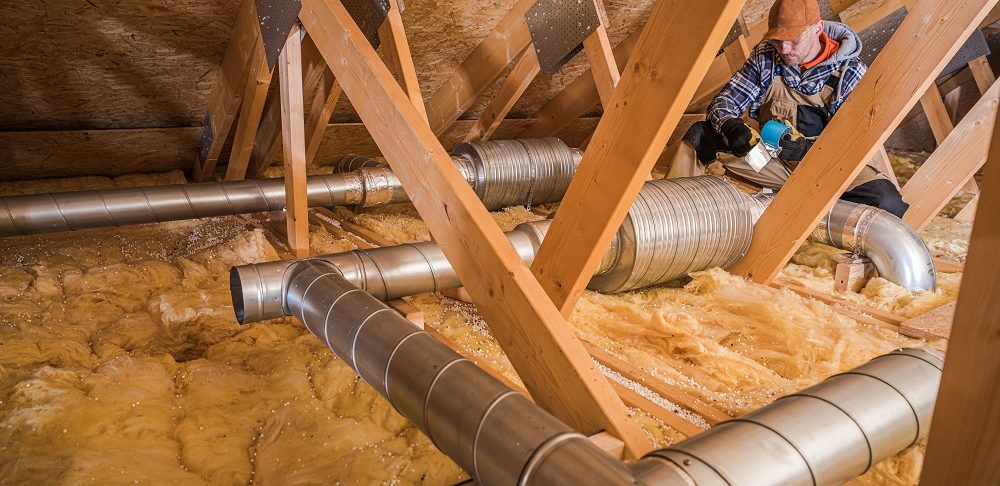
Roof ventilation creates a continuous flow of air through the attic, pulling cool outside air in through intake vents and pushing hot, moist air out through exhaust vents. Without it, heat and moisture accumulate and cause serious structural damage over time.
A properly ventilated attic works on a simple principle: soffit vents along the eaves draw in cooler outdoor air, while exhaust vents at the roof peak allow hot air to escape. The result is a balanced system that keeps attic temperatures from spiking to dangerous extremes and protects the roof structure, insulation, and living space below.
Poor roof ventilation leads to four major problems: heat buildup, moisture damage, accelerated shingle deterioration, and higher cooling costs. In Louisiana’s humid subtropical climate, inadequate attic airflow causes wood decking to warp, insulation to lose its R-value, and mold to establish itself quickly.
 When attic temperatures spike in a New Orleans summer, asphalt shingles bake from below as well as above. This dual-sided exposure causes shingles to blister, curl, and crack years ahead of their rated lifespan.
Most major shingle manufacturers, including GAF and CertainTeed, include ventilation requirements in their warranty terms. Homes that do not meet International Residential Code (IRC) Section R806 standards may face voided shingle coverage.
Louisiana’s high relative humidity means attic air carries substantial water vapor year-round. Without proper exhaust, that vapor condenses on wood rafters and sheathing, creating the wet conditions that mold species like Stachybotrys need to grow.
Prolonged moisture exposure causes wood sheathing to soften and rot, weakening the structural layer your shingles depend on. A residential roof inspection can catch early-stage deck deterioration before it reaches the framing below.
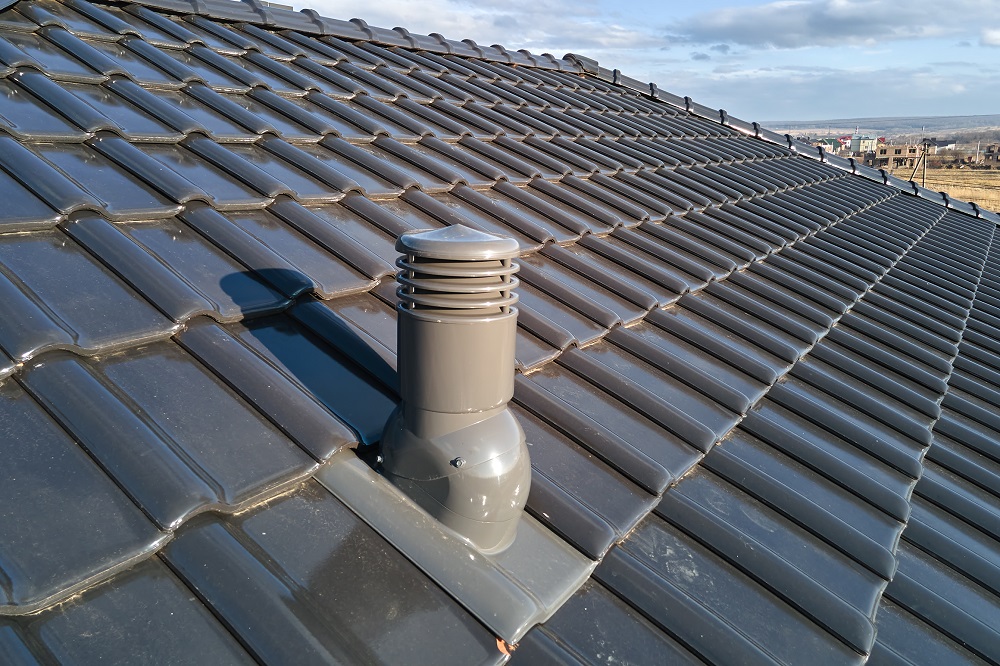
Residential roofs use two categories of vents: intake and exhaust. Soffit vents handle intake while ridge vents, box vents, turbine vents, and power attic ventilators (PAVs) handle exhaust, and the National Roofing Contractors Association (NRCA) recommends keeping both sides equal for best performance.
Here is a breakdown of the most common vent types:
Ridge vents paired with continuous soffit vents are the most reliable passive system for residential homes. They require no power, have no moving parts, and create uniform airflow across the entire attic floor. Our residential roof ventilation services cover assessment, installation, and upgrades for all vent types.
IRC Section R806.2 sets the minimum at 1 square foot of net free area (NFA) per 150 square feet of attic floor space, reducible to 1:300 when 40 to 50 percent of ventilation is placed in the upper attic with the remainder at the eave. These are minimums, and roofing professionals typically recommend exceeding them in high-humidity climates like Louisiana.

Net free area (NFA) is the actual unobstructed opening through which air can pass, not the total vent frame size. A 1,500 square-foot attic needs at least 10 square feet of NFA split evenly between intake and exhaust.
Measure the total attic floor area, divide by 150, then split the result equally between intake and exhaust. If either side falls short, the system is unbalanced and will underperform regardless of total vent count.
Many older New Orleans homes predate modern ventilation codes, with soffits sealed during past renovations and no replacement intake added. A ventilation audit at your next roof replacement is the most practical time to bring the system up to current IRC standards.
Yes, and the impact is significant in hot climates. The U.S. Department of Energy (DOE) notes that a well-ventilated attic reduces heat transfer into living spaces, directly lowering AC demand in a city where cooling systems run six or more months per year.
Without adequate exhaust, attic heat radiates through ceiling insulation into living areas, forcing your AC to work harder and raising both energy costs and HVAC wear. According to Air Vent Inc.’s published research, a properly balanced ventilation system keeps attic temperatures within 10 to 15 degrees of outdoor air, while an unbalanced or unventilated attic can run 25 degrees or more above ambient on a peak summer day in a climate like New Orleans.
Six warning signs point to a ventilation problem. Any one of them warrants a call to a roofing professional, and more than one appearing together usually means the issue has already caused damage worth addressing right away.
Watch for these signs in and around your home:
 Mold on Attic Wood Surfaces: Dark staining or fuzzy growth on sheathing means moisture levels have been elevated long enough for mold to establish itself.
Do not wait for visible damage to act. Scheduling a ventilation check alongside your annual roof inspection is the most cost-effective way to catch problems before they compound into structural repairs.
A properly ventilated roof lasts longer, uses less energy, and keeps the living space below more comfortable year-round. Getting the intake-exhaust balance right protects your shingles, your attic structure, and your home’s air quality all at once.
Big Easy Roof Contractors provides expert residential roofing services to homeowners throughout New Orleans and surrounding Louisiana communities, with the local knowledge to match every solution to Gulf Coast conditions.
Call us today for a free estimate, and let our team assess whether your roof’s ventilation system is working as it should.
Yes. The International Residential Code (IRC) requires ventilation for virtually all residential attic spaces. The only exceptions involve certain unvented attic assemblies permitted under IRC R806.5, which require insulation applied directly to the underside of the roof sheathing and no conventional attic vents. For most New Orleans homes, standard attic ventilation is both required and beneficial.
Too much exhaust without matching intake can create negative pressure, which pulls conditioned air from living spaces into the attic and increases energy costs. The NRCA recommends a 50/50 split between intake and exhaust capacity, with neither side exceeding the other by more than a small margin.
Metal roof vents generally last 20 to 30 years with proper maintenance. Plastic vents may degrade faster in UV-heavy climates like Louisiana. Ridge vents installed alongside quality roofing materials often last the life of the shingles themselves, typically 15 to 30 years for standard asphalt shingles depending on type and installation quality.
Yes. Mold requires moisture to grow. Proper ventilation reduces attic humidity by continuously cycling out damp interior air before it can condense on wood surfaces. In Louisiana’s humid subtropical climate, ventilation is one of the most effective passive tools for keeping attic moisture levels in check throughout the year.
Adding ventilation helps prevent further moisture accumulation, but it will not reverse existing damage. Mold growth, rotted sheathing, or compromised insulation needs direct remediation first. A professional inspection can determine the right combination of repair and ventilation upgrade before conditions worsen.
It can. Many major shingle manufacturers require ventilation that meets IRC standards as a condition of their product warranties. Insurance companies may also factor roof condition and code compliance into claims assessments. Documenting that your ventilation meets current code requirements can protect both warranty coverage and future claims outcomes.
For most New Orleans-area homes, a continuous ridge vent paired with continuous soffit vents is the most reliable passive system. This combination creates uniform airflow across the full attic without moving parts or added energy use. In attics with limited ridge length or complex roof lines, a mix of box vents and power attic ventilators may supplement the passive system effectively.


